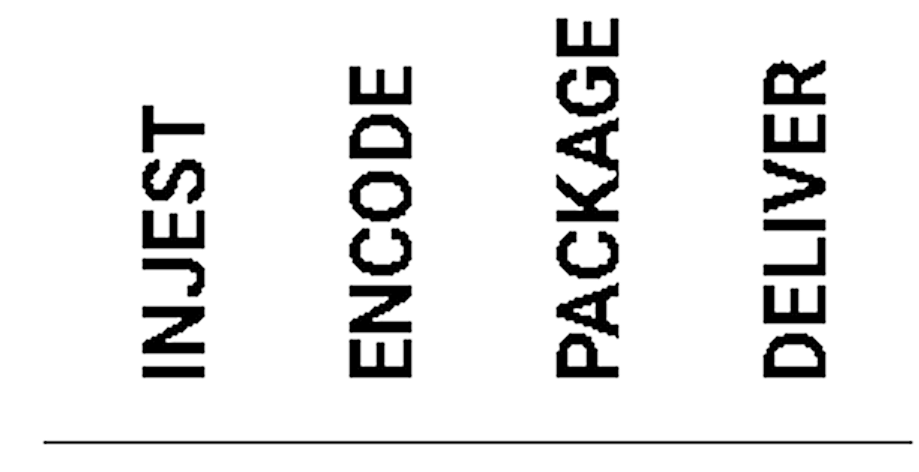
Based on workflow, this map shows how ecosystem partners align across the video pipeline, with some spanning multiple stages.
Click on partner for details.
Global CDN and cloud compute platform with VPU-powered encoding availability.
Type: Cloud / CDN deployment, IaaS
- Deploy VPUs in Akamai’s cloud to enable scalable, cost-efficient encoding without managing hardware.
- Ideal for customers who need rapid testing, instant scaling, or hybrid cloud + on-prem VPU workflows.
- Expands NETINT deployments globally through Akamai’s distributed infrastructure.
Advantech offers edge-ready hardware platforms for contribution, ingest, and video capture workflows.
Type: Hardware platforms, capture, edge compute
- Reliable, high-performance hardware for live ingest and contribution pipelines.
- Ideal for edge deployments where VPUs need ruggedized, compact systems.
- Combines with NETINT VPUs to build low-power, high-density capture-to-transcode nodes.
Systems integrator specializing in architecting and deploying modern broadcast & streaming infrastructures.
Type: Systems integration, workflow deployment
- Designs and deploys end-to-end streaming and broadcast pipelines using VPU-powered encoding.
- Reduces deployment risk with hands-on engineering, testing, and workflow validation.
- Ideal for operators needing turnkey integration of NETINT VPUs into existing production systems.
Professional transcoding and live workflow software used in broadcast and streaming.
Integration Type: Transcoding software, FFmpeg integration, workflow control
- Integrates NETINT VPUs into Cambria workflows for high-volume live and file-based encoding.
- Delivers predictable quality, automated profiles, and scalable broadcasting pipelines.
- Ideal for customers upgrading legacy CPU-based transcode farms to ASIC acceleration.
CDN77 is a global CDN delivering high-performance streaming distribution.
Integration Type: CDN delivery, edge distribution
- Optimizes delivery for VPU-encoded streams at scale.
- Ideal for sports, entertainment, and live-event workloads with global reach.
- Creates an end-to-end path from NETINT encoding to worldwide audiences.
Live transcoding and workflow systems for operators requiring reliability and control.
Integration Type: Transcoding stack, live workflow integration
- Seamlessly integrates VPU acceleration into carrier-grade live encoding systems.
- Offers monitoring and orchestration tools that simplify large deployments.
- Perfect for operators scaling from pilot to nationwide VPU rollouts.
Server infrastructure commonly used for high-density VPU deployments.
Integration Type: Certified servers, hosting platforms
- Dell servers provide stable, enterprise-grade chassis for multi-VPU density.
- Used in many real-world deployments for broadcast, cloud, and CDN workloads.
- NETINT VPUs drop cleanly into Dell’s existing PCIe ecosystems for rapid deployment.
APIs and infrastructure for real-time streaming, communications, and playback.
Integration Type: Ingest, playback, API platform
- Enhances VPU-powered workflows with low-latency ingest and audience playback tools.
- Great for interactive video, conferencing, or real-time applications.
- Completes the chain from VPU transcoding to user playback experience.
Broadcast and OTT video processing software with professional-grade pipelines.
Integration Type: Transcoding, workflow engine
- Adds advanced stream control and processing capabilities to VPU-encoded workflows.
- Ideal for broadcasters upgrading to modern
low-power processing stacks.
- Easy Tools + NETINT simplifies complex multi-profile or multi-language workflows.
Low-latency global compute and CDN network used heavily in gaming and streaming.
Integration Type: CDN, Cloud compute
- Perfect for real-time applications requiring <50ms global transport.
- Pairs with VPU-powered encoding to deliver high-volume, low-latency live content.
- Ideal for esports, gaming streams, and interactive live scenarios.
European systems integrator focused on broadcast-grade deployments.
Integration Type: Systems integration, workflow deployment
- Helps operators deploy NETINT-based encoding infrastructures at scale.
- Deep experience integrating VPU workflows into professional broadcast chains.
- Reduces deployment friction with hands-on engineering and architecture support.
J21 Corporation
Integration Type: Systems integration, workflow deployment
- Helps operators deploy NETINT-based encoding infrastructures at scale.
- Deep experience integrating VPU workflows into professional broadcast chains.
- Reduces deployment friction with hands-on engineering and architecture support.
Orchestrates large-scale video encoding workflows across cloud and on-prem infrastructures.
Integration Type: CDN platform, workflow automation
- Provides a fully integrated path from ingest to VPU encoding to delivery.
- Includes orchestration tools that make deploying VPU-based workflows simple.
- Ideal for SaaS video platforms wanting turnkey OTT at low OPEX.
JW Player
Integration Type: CDN platform, workflow automation
- Provides a fully integrated path from ingest to VPU encoding to delivery.
- Includes orchestration tools that make deploying VPU-based workflows simple.
- Ideal for SaaS video platforms wanting turnkey OTT at low OPEX.
Real-Time 8K & Quad 4K Contribution Infrastructure
Integration Type: xx
- 12G-SDI Quad-Link Ingest into Quadra VPU Hardware Encoding. Direct high-bandwidth video input feeding VPU-accelerated encoding for broadcast-grade workflows.
- 8K60 or Four Simultaneous 4K60 Streams
Enables ultra-high-resolution live production without compromising performance or density.
- Ultra-Low Latency IP Transport via WebRTC
Delivers real-time contribution streams over IP for modern remote
Media transport and synchronization platform enabling mission-critical contribution & distribution.
Integration Type: Contribution, Low-Latency Media Transport
- Ensures secure, ultra-reliable transport for live video entering VPU-powered processing chains.
- Ideal for sports, remote production, and large event contribution requiring stable low-latency delivery.
- Pairs with NETINT VPUs to create an end-to-end ingest to encode delivery pipeline for live content.
Real-time video composition framework for building modern streaming workflows.
Integration Type: Workflow Composition, Live Processing
- Enables dynamic overlays, multiview, layout changes, and live video manipulation.
- Combines with VPUs for ultra-efficient transcoding after composition.
- Ideal for sports, events, virtual production, and interactive streaming.
Dynamic real-time ABR ladder generation and streaming pipeline automation.
Integration Type: ABR Optimization, Processing Control
- Automatically generates optimal ladders for VPU-based encoding workflows.
- Reduces storage and bandwidth while maintaining quality.
- Great for platforms with fast-changing or unpredictable content sources.
VPU Accelerated LCEVC Encoding for Smarter Bitrate Efficiency
Integration Type: Standardizing technology
- Boosts Existing Codecs Without Replacing Infrastructure. Adds an enhancement layer on top of H.264, HEVC, or AV1 enabling bitrate reduction without disruptive workflow changes.
- Reduces Compute and Energy Load at Scale
Improves compression efficiency while lowering processing complexity — ideal for high-density encoding environments.
- Accelerates Deployment of Advanced Compression
Delivers performance gains without waiting for new silicon or full ecosystem migration.
Industry-standard protocol and platform for low-latency video contribution.
Integration Type: Contribution workflow, transport layer
- Ensures error-free delivery of live video into VPU-powered workflows.
- Ideal for broadcast, live events, remote production, and 24/7 streaming.
- Zixi ingest to NETINT transcoding to CDN delivery creates a robust end-to-end chain.