VPU Products
Deployment ready Quadra VPUs, systems, and software designed to deploy video at scale.
Quadra VPUs
Purpose-built Video Compute
Hardware acceleration designed to deliver predictable, high-density video processing across edge and data center environments.
Explore VPUs >
Quadra Video Servers
Deployment-ready Systems
Pre-integrated servers optimized for specific VPU configurations, power envelopes, and scaling requirements.
Explore Servers >
Bitstreams
Control & Automation
Software for managing VPU-based video operations and workflows at scale. Bitstreams ships preloaded on all Video Servers.
View Bitstreams >
Choose your Deployment Path
Quadra VPUs and servers are designed to work together as a system. Select based on where and how you deploy video.
Edge / Compact Deployment
Quadra Mini Server
Fixed, efficient, edge-ready
- Includes Quadra T1M VPU
- Optimized for low power and small footprint
- Designed for edge and space-constrained environments
Best when:
- Edge-ready or regional deployments
- Pre-configured, simple, no tuning required
- Low power and small space constrained
See Mini Server Details >
Data Center / Scale Deployment
Quadra Video Server
Flexible, high-density scaling for production workloads
Supports:
- T1U — standard single-chip density
- T1A — tuned single-chip profiles
- T2A — dual-chip, maximum density
Best when:
- Scaling live or VOD workloads
- Optimizing lowest cost per stream
- Maximizing rack density and cost efficiency
See Video Server Details >
Same Quadra architecture. Same software stack. Different deployment fit.
VPUs - Video Processing Units
Quick VPU Selection Guide
T1M
Choose for edge or space-constrained deployments.
T1U
Choose for standard scale-out data center deployments.
T1A
Choose when power, thermals or tuning matter most.
T2A
Choose this dual-chip VPU when density and cost per stream are the priority.
|
|
|
|
||
| OEM VPU T1M | Smart VPU T1U | Smart VPU T1A | Smart VPU T2A | ||
|---|---|---|---|---|---|
| Quick Selection Guidance | Choose for edge or space-constrained deployments. | Choose for standard scale-out data center deployments. | Choose when power, thermals or tuning matter most. | Choose this dual-chip VPU when density and cost per stream are the priority. | |
| ASIC Hardware | G5 | G5 | G5 | 2x G5 | |
| Size / Form Factor | M.2 | U.2 | AIC | AIC | |
| Power Consumption | 8-10W | 17W | 20W | 40W | |
| Artificial Intelligence | 0 | 15 TOPS | 15 TOPS | 36 TOPS | |
| Software | FFmpeg SDKs, GStreamer, LibXcoder API integration | ||||
| Stream Capacity | Encode | 20x 1080p30 5x 4Kp30 |
32x 1080p30 8x 4Kp30 2x 8Kp30 |
64x 1080p30 16x 4Kp30 4x 8Kp30 |
|
| Decode | 25x 1080p30 6x 4Kp30 |
48x 1080p30 12x 4Kp30 4x 8Kp30 |
96x 1080p30 24x 4Kp30 8x 8Kp30 |
||
| Codecs | Encode | H.264, HEVC, AV1, JPEG, HEIF, AVIF | |||
| Decode | H.264, HEVC, VP9, JPEG | ||||
| T1M Specs > | T1U Specs > | T1A Specs > | T2A Specs > | ||
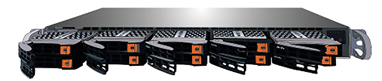
Quadra Video Servers
|
|
||
| Quadra Video Server | Quadra Mini Server | ||
|---|---|---|---|
| Quick Selection Guidance |
• Flexible, high-density scaling for production workloads • Ideal for scaling live or VOD workloads • Optimized for low power and highest density • Maximizes cost efficiency |
• Ideal for edge-ready or regional deployments • Pre-configured, simple, no tuning required • Lowest power draw with smallest footprint |
|
| Architecture | x86 | x86 | |
| CPU | AMD® EPYC | Intel® 13th Gen i7 | |
| ASIC Hardware | 10x T1Us | T1M | |
| Size / Form Factor | 1RU | 1RU Half Rack | |
| Power Consumption | ~500W | ~138W | |
| Artificial Intelligence | 150 TOPS | 0 | |
| Software |
Preloaded with NETINT Bitstreams™ Workflow automation management tool, requires license activation. |
||
| FFmpeg SDKs, GStreamer, LibXcoder API integration | |||
| Stream Capacity | Encode |
320x 1080p30 80x 4Kp30 20x 8Kp30 |
20x 1080p30 5x 4Kp30 |
| Decode |
480x 1080p30 120x 4Kp30 30x 8Kp30 |
25x 1080p30 6x 4Kp30 |
|
| Codecs | Encode | H.264, HEVC, AV1, JPEG, HEIF, AVIF | |
| Decode | H.264, HEVC, VP9, JPEG | ||
| See Video Server Specs > | See Video Server Specs > | ||
Bitstreams Control Software
Web-based workflow automation management tool to automate FFmpeg and dashboard monitoring.
- Preloaded on all Quadra Video Servers and requires licence activation
- Designed for non-technicals with template preconfigurations to automate FFmpeg
System Features:
- Code-free configuration of FFmpeg
- Dashboard provides visual quick-check for streaming error alerts, system health check, CPU/VPU hardware capacity loads
- Generates report logs for stream status
- Template based configurations for live stream sessions, set once-use many
- Managed through web app or custom API
- Requires annual subscription
Live Streaming:
- Supports long event durations
- Input: SRT, RTMP
- Output: Dash/HLS
Live Video Encoding:
- System runs 24/7/365
- Inputs: SRT, RTMP, Dash/HLS, Multicast/UDP
- Outputs: Dash/HLS, Multicast/UD
- Records to a file
Encoding Use Cases
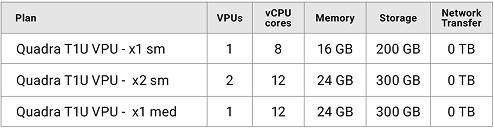
VPU Infrastructure (IaaS)
Customer: Akamai
Quadra VPUs deliver high-density, cost-efficient video encoding in the cloud, enabling customers to scale without owning hardware.
Ideal for: all streaming scenarios
- Subscription-based access to VPU-powered encoding with no infrastructure investment.
- Proven high-density transcoding at low power consumption for general-purpose cloud users.
- Virtualization via PCIe VF/PF ensures secure separation of management and transcoding workloads.
Dense Decoding
(Security/Surveillance)
Quadra VPUs enable video surveillance platforms to decode hundreds of simultaneous camera feeds, deliver lower bitrates, and power AI-driven analytics—all on a single server.
Ideal for: security platforms, command centers
- Bulk decode up to 48× 1080p30 per VPU and 480× streams per 1RU server.
- Up to 80% lower storage requirements through reduced output bitrates.
- On-chip AI for facial recognition, object detection, and classification, without replacing legacy cameras.
Edge Encoding
Quadra’s M.2 VPU enables ultra-low-latency edge encoding for dynamic ad insertion and cloud gaming, delivering high-quality results with minimal footprint.
Ideal for: edge CDNs, cloud gaming networks
- Quadra’s M.2 VPU enables low-latency edge encoding with direct P2P YUV/RGBA pull, minimizing delay in ad stitching and rendering.
- Cooperative development delivered a compact T1M form factor, enabling dense multi-node edge deployment for regionalized ad insertion and cloud-gaming responsiveness.
Multilayer AV1 Encoding
Quadra VPUs support multi-layer AV1 encoding for dynamic overlays, creative ad formats, and real-time effects at high frame rates.
Ideal for: ad-tech platforms, creative effects
- Supports up to 4 AV1 layers (BL, EL1–EL3) for dynamic ad overlays and multi-element compositions.
- Delivers real-time 1080p60 multilayer AV1 encoding with customizable reference structures for advanced visual effects.
AI Acceleration in Transcoding
Quadra VPUs accelerate AI inference during live transcoding by identifying regions of interest and offloading intensive analysis from the GPU.
Ideal for: surveillance AI, sports analysis
- Detects key visual regions on-chip and forwards coordinates to advanced GPU AI models.
- Reduces GPU compute load by focusing inference only where needed.
- Enhances real-time analysis for surveillance, sports, and live monitoring.
Capped CRF Encoding for CDN
Quadra VPUs optimize capped-CRF encoding to deliver consistent, high-density, bandwidth-efficient live streams across CDN workflows.
Ideal for: live CDNs, OTT streaming
- High-density encoding with controlled max bitrate for predictable CDN costs.
- Optimized 2D downscaling for ABR ladders.
- Compatible even with older servers and Linux OS distributions.
Live Contribution Encoding
Quadra VPUs deliver high-quality, low-latency contribution encoding including mezzanine and ABR ladder generation.
Ideal for: Broadcast, live production workflows
- Generate mezzanine streams (e.g., 4K60 HDR HEVC) and full ABR ladders simultaneously.
- Lower latency and better QC than cloud-based ladder generation.
- Affordable high-density encoding for SDI and broadcast inputs.
Multiview Encoding
Quadra VPUs power multiview streaming by stitching multiple independent bitstreams into user-defined layouts without double-encoding.
Ideal for: sports betting, fantasy leagues
- Stitch 4+ independent feeds into a single tile-based bitstream.
- MCTS encoding prevents motion artifacts across tile boundaries.
- Encode each feed once—up to 2
CAPEX Reduction of $8.6M
Customer: Mayflower
Mayflower cut $8.6M in annual OPEX by replacing CPU encoders with Quadra VPUs across their high-volume user-generated content (UGC) streaming CDN.
Ideal for: UGC CDNs, large, streaming platforms
- Saved $8.6M annually (80% OPEX cut) by replacing CPU encoders with Quadra VPUs.
- Reduced compute cost from $10M → $1.4M (CPU/GPU vs VPU infrastructure).
Cost Reduction Deployment
Customer: api.video
api.video slashed encoding costs by 99.3% using Quadra VPUs, enabling them to offer free encoding as a market-defining differentiator.
Ideal for: API-driven video platforms, SaaS encoding services
- Cut encoding cost to $0.0002/minute enabling a “free encoding” offering which grew huge customer loyalty
- Maintained high-quality H.264/HEVC comparable to FFmpeg.
50% Hardware Reduction
Customer: Zapping
Quadra VPUs deliver high-density, cost-efficient video encoding in the cloud, enabling customers to scale without owning hardware.
Ideal for: all streaming scenarios
- Subscription-based access to VPU-powered encoding with no infrastructure investment.
- Proven high-density transcoding at low power consumption for general-purpose cloud users.
- Virtualization via PCIe VF/PF ensures secure separation of management and transcoding workloads.
Not customer approved...yet
Customer: JW Player
Migrating from CPU cloud giant to VPU core infrastructure. For 24×7 video services, they’re hitting a ~10x monthly OPEX saving over previous provider, per channel.
Ideal for: 24×7, Live and On-demand video distrubution, Advertisers
- Achieved ~10x Monthly OPEX saving PER 24×7 CHANNEL!
- Huge reduction in Channel initialization and Video Startup tim
Upgrade legacy surveillance systems to 4K, without replacing existing cameras
Quadra VPUs deliver high-density, cost-efficient video encoding in the cloud, enabling customers to scale without owning hardware.
Ideal for: all streaming scenarios
- Subscription-based access to VPU-powered encoding with no infrastructure investment.
- Proven high-density transcoding at low power consumption for general-purpose cloud users.
- Virtualization via PCIe VF/PF ensures secure separation of management and transcoding workloads.
Reduce Surveillance Archives up to 80%
Store high-quality surveillance video without the storage penalty. Quadra VPUs apply AI-driven video compression post-capture, dramatically reducing bitrates while maintaining target visual quality, breaking the traditional link between archive size and storage cost. Reduces long-term storage footprint.
Ideal for: Municipal, industrial or enterprise surveillance spaces with large archives and long retention requirements.
- Shrink archive storage to ~20% of original size
- Lower nDVR CAPEX and OPEX without sacrificing usable footage
Questions You’re Already Asking:
Technical FAQs for CTOs
Q: What problem are Quadra VPUs designed to solve?
A: Quadra VPUs are purpose-built to handle video encoding and decoding at sustained scale. They replace CPU- or GPU-based video workloads where throughput, power efficiency, and operational predictability are limiting factors.
Q: Do Quadra VPUs replace CPUs or GPUs?
A: No. Quadra VPUs replace CPU or GPU resources only for video processing tasks. General compute, orchestration, AI training, and graphics workloads remain unchanged.
Q: Are VPUs a general-purpose accelerator?
A: No. Quadra VPUs are fixed-function video processors. They are designed exclusively for encoding, decoding, and video-adjacent processing—not general compute or model training.
Technical FAQs for Engineers
Q: Is deploying VPUs a strategic platform decision?
A: No. VPU adoption is a compute substitution decision, not a platform commitment. It affects how video workloads are processed—not how applications, data, or cloud strategy are structured.
Q: Does this create vendor lock-in?
A: No. VPUs integrate into standard video frameworks and existing infrastructure. Pipelines, orchestration, and monitoring remain owned by your team, and rollback paths remain intact.
Q: What is the downside risk if this doesn’t work?
A: Deployment is incremental and reversible. If benchmarks or production behavior do not meet expectations, traffic can be shifted back to existing CPU or GPU paths without disruption.